Step by step care for cut flowers to make them last longer
Fresh flowers can transform a room in minutes. The colour, the scent, the little lift they give on a grey morning in the UK - it's hard to beat. But if you have ever bought a beautiful bouquet, only to see it droop far too quickly, you will know the frustration. The good news is that step by step care for cut flowers to make them last longer is not complicated. A few careful habits, done in the right order, can make a real difference to how long your blooms stay bright, upright, and worth enjoying.
This guide walks you through the practical routine from the moment the flowers arrive to the daily checks that keep them going. It is written for anyone who wants longer-lasting flowers at home, in an office, or for a gift that needs to look good for as long as possible. If you are also looking for related care advice, you may find the site's flower care guidance useful alongside this article.
Quick takeaway: clean water, fresh cuts, the right vase, and regular upkeep matter more than fancy tricks. Do those basics well, and your flowers will usually last noticeably longer.
In a nutshell, the trick is not one magic product. It is consistency. Think of it like keeping a kettle clean or washing fruit before eating it. Small jobs, done properly, save a lot of disappointment later. And to be fair, flowers are a bit fussy - but they are worth the effort.
Table of Contents
- Why Step by step care for cut flowers to make them last longer Matters
- How Step by step care for cut flowers to make them last longer Works
- Key Benefits and Practical Advantages
- Who This Is For and When It Makes Sense
- Step-by-Step Guidance
- Expert Tips for Better Results
- Common Mistakes to Avoid
- Tools, Resources and Recommendations
- Law, Compliance, Standards, or Best Practice
- Options, Methods, or Comparison Table
- Case Study or Real-World Example
- Practical Checklist
- Conclusion
- Frequently Asked Questions
Why Step by step care for cut flowers to make them last longer Matters
Cut flowers are living material. The moment they are removed from the plant, they start losing access to water and nutrients. That means every hour matters, especially in warm rooms, sunny windows, or homes with central heating humming away in the background. If you want blooms to stay fresh for days rather than fading after a couple of afternoons, the care routine matters more than the flower variety alone.
There is also a simple value argument. A bouquet can be a thoughtful gift, a table centrepiece, or a small bit of comfort after a long week. When flowers last longer, they feel less wasteful and more rewarding. You get more enjoyment out of the same bunch, and that matters whether you bought them for a birthday, a dinner party, or just because the kitchen needed cheering up.
One thing people often miss: the first few hours after purchase set the tone. If flowers spend too long in a warm car, sit in water that has gone cloudy, or are left in packaging for ages, they can never fully recover. That early care is the foundation. Get it right and everything else becomes easier.
How Step by step care for cut flowers to make them last longer Works
Cut flower care works by slowing the natural causes of decline. Flowers wilt mainly because they cannot take up enough water, bacteria block the stems, and heat speeds up ageing. Air trapped in stems, dirty vases, and damaged leaves can all make the problem worse. The aim is to keep the water pathway open and the stems hydrated for as long as possible.
Freshly cut stems take up water more efficiently when they are trimmed cleanly. Clean water slows bacterial growth. A cool, stable spot reduces stress on the blooms. Removing leaves below the waterline helps prevent rot and smell. These are small things, but together they make a visible difference. You will notice it most with roses, tulips, lilies, peonies, and mixed hand-tied bouquets.
It is also worth understanding that not all flowers behave the same way. Some are thirsty and delicate. Others are more forgiving. A mixed bouquet can be a bit of a balancing act, because one flower may be dropping petals while another still looks nearly new. That is normal. The job is to keep the whole arrangement at its best for as long as possible, not to make every stem act the same way.
Key Benefits and Practical Advantages
The obvious benefit is that your flowers last longer. But there are several more practical advantages too, and these are often the real reason people stick with a care routine.
- Better value: you get more days of enjoyment from the same bouquet.
- Cleaner presentation: fresh water and tidy stems help arrangements look neater for longer.
- Less waste: fewer flowers need to be thrown away early.
- Improved scent: some flowers smell better when they are healthy and hydrated.
- Better gift impact: when flowers last, the gesture feels more generous and thoughtful.
There is also a quiet emotional benefit. Fresh flowers in the room change the tone of the day. A vase on a desk can make a work call feel slightly less bleak; a bunch on the table can make an ordinary Tuesday feel a bit special. That may sound small. It isn't really.
Who This Is For and When It Makes Sense
This guide is useful for anyone caring for cut flowers, but especially for people who:
- buy bouquets for home use and want them to last longer
- send flowers as a gift and want them to arrive looking strong
- manage reception areas, hotels, offices, or restaurants
- prepare flowers for events, dinners, or celebrations
- often wonder why some bouquets fade quickly while others hold up well
It makes particular sense if you are dealing with flowers that have travelled, been delivered earlier in the day, or arrived during warmer weather. British homes can also be surprisingly unkind to flowers: a sunny windowsill at midday, a radiator nearby, or a bowl of fruit on the counter can all shorten vase life. Small details, but they add up.
If you are arranging a gift delivery, check service details before you order. The website's flower delivery and delivery information pages can help with expectations around timing and arrival, which matters when you want flowers to look their best from the start.
Step-by-Step Guidance
Here is the practical routine. Nothing fancy. Just the steps that genuinely help.
1. Unpack the flowers as soon as possible
As soon as the flowers arrive, remove wrapping carefully and let the stems breathe. If they have been tied tightly, give them a little space. Flowers can sometimes look slightly tired after transport, especially in winter or after a warm delivery vehicle. That does not automatically mean they are doomed. Quite often, they perk up once they are trimmed and placed in water.
2. Choose a clean vase
A clean vase is not optional. Leftover bacteria from a previous bouquet can shorten the life of the new one. Wash the vase with hot soapy water, rinse thoroughly, and make sure there is no residue. A slight film on glass or a dusty rim may not look like much, but flowers are more sensitive than people think.
3. Fill with fresh, cool water
Use fresh water straight away. Cool or lukewarm water is usually fine for mixed bouquets, though some flowers have specific preferences. The key is cleanliness and consistency. Change the water fully rather than simply topping it up every few days. Topping up sounds helpful, but old water left in the vase still contains bacteria.
4. Remove leaves below the waterline
Any leaf sitting in water will decay and encourage bacterial growth. Strip those lower leaves off before arranging the stems. This one task often makes a bigger difference than people expect. It also stops that slightly swampy smell that nobody wants in the lounge.
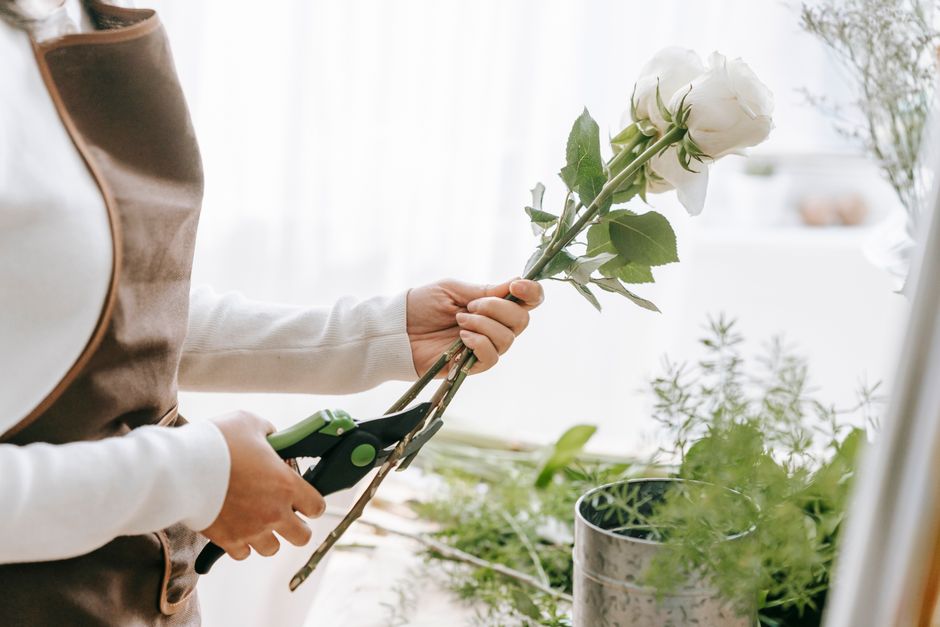
5. Re-cut the stems at an angle
Trim each stem by around 1 to 2 cm with clean, sharp scissors or floral snips. Cutting at an angle increases the surface area for water uptake and helps prevent the stem from sitting flat against the vase base. If the stems are woody or thick, a sharper blade gives a better cut. Dull scissors can crush the stem, which is not ideal at all.
6. Place the bouquet in water immediately
Do not leave freshly cut stems sitting around on the counter while you "just tidy up for a minute." They dry out quickly. Put them into water as soon as they are cut. Honestly, that little gap is one of the easiest mistakes to make.
7. Position the vase in a cool, safe spot
Keep flowers away from direct sun, radiators, fruit bowls, and draughty spots. Heat speeds up ageing. Ripening fruit releases ethylene gas, which can shorten vase life for many flowers. A cool room, out of harsh light, is usually best. Near a window is fine if it is not scorching by lunchtime.
8. Refresh the water regularly
Every two days is a good habit for most bouquets. Wash the vase if the water becomes cloudy, trim the stems again, and remove any flowers that are fading fast. One drooping stem can drag the look of the whole arrangement down. A bit brutal, but true.
9. Remove spent blooms promptly
As flowers age, some heads will go over before others. Remove them rather than letting them collapse into the rest of the bunch. This keeps the arrangement looking fresh and reduces rot. With mixed bouquets, this is part of the game.
10. Keep an eye on the little things
If petals are crisping, water smells off, or stems feel slimy, act quickly. Re-cut, refresh, and re-space the stems if needed. A quick five-minute tidy-up can often rescue a bouquet that was starting to slip. It's not glamorous work, but it pays off.
Expert Tips for Better Results
Once the basics are in place, a few extra habits can make your cut flowers last even longer.
- Use the right vase size. Stems need support, but they also need airflow. A vase that is too tight can crush the arrangement, while one that is too wide can leave stems flopping around.
- Cut stems under water for delicate flowers. This helps reduce air getting into the stem. It is especially helpful for some soft-stemmed blooms.
- Separate thirsty flowers if needed. Tulips, roses, and lilies sometimes do better when arranged thoughtfully rather than squeezed into a heavy mixed design.
- Be gentle with conditioning leaves and petals. Bruising shortens vase life. Handle blooms like you would a good tomato - softly, but not timidly.
- Keep the water line low enough. You want stems in water, not leaves or decorative wrap soaking underneath.
- Use flower food if supplied. It can help, especially when used correctly. Follow the packet instructions rather than guessing.
A useful rule of thumb: if a bouquet looks a bit congested, lighten it. Flowers like breathing room. So do people, to be fair.
If you need flowers for a workplace or repeated ordering, you may also want to look at corporate accounts and the company's about us information to understand the service style and support available.
Common Mistakes to Avoid
Most flower failures are not dramatic. They are small, ordinary mistakes repeated over a few days. The good news? They are easy to fix once you spot them.
- Leaving flowers in packaging too long. Beautiful wrapping does not count as care.
- Using a dirty vase. Old residue can spoil fresh water fast.
- Forgetting to remove leaves from water. This is one of the biggest avoidable issues.
- Placing flowers near heat. Radiators, sunny ledges, and hot kitchens all shorten life.
- Not trimming stems again. A fresh cut every couple of days can help water uptake.
- Using too little water. Some stems dry out quicker than you think.
- Ignoring one bad stem. A decaying stem can affect the rest of the bouquet.
Another quiet mistake is trying to overcomplicate things. People sometimes add random extras from the kitchen, follow a friend's old trick, or assume there must be a secret formula. Truth be told, there usually isn't. Clean water, clean cut, cool position, regular refresh. That is the backbone.
Tools, Resources and Recommendations
You do not need much equipment, which is part of the appeal. A basic, sensible setup is enough.
| Item | Why it helps | What to look for |
|---|---|---|
| Clean vase | Reduces bacteria and keeps water clear | Wide enough for the stems, easy to wash |
| Sharp scissors or floral snips | Makes a clean cut and avoids crushing stems | Sharp blades, comfortable grip |
| Fresh cool water | Keeps stems hydrated and limits bacterial growth | Changed regularly, not just topped up |
| Flower food | Can support hydration and freshness when used properly | Follow instructions carefully |
| Soft cloth or towel | Useful for drying the vase and handling drips | Clean and lint-free |
For readers who prefer a dependable ordering experience as well as care advice, the site's guarantees page may be helpful when checking what support is offered if flowers arrive in less-than-perfect condition.
And if you are thinking more broadly about responsible choices, the company's sustainability information may also be worth a look. That does not change the care steps, but it can help when choosing where to buy.
Law, Compliance, Standards, or Best Practice
For home flower care, there is no special legal compliance issue in the way there might be for food safety or building work. Still, best practice matters, especially for businesses, hospitality venues, and anyone handling flowers for customers or events.
In a commercial setting, clean handling, safe water disposal, and sensible maintenance routines are part of good housekeeping. If flowers are displayed in public areas, they should be kept tidy and free from mouldy water, sharp broken stems, or unstable containers that could spill. That is just common-sense risk management, really.
If you are ordering flowers online, it is also sensible to read the terms and conditions, returns and refund policy, and payment information so you know what to expect if something goes wrong. For any service-related questions, the contact page is the right place to start.
If accessibility matters for your team or household, the company's accessibility statement is also available. That kind of transparency builds trust, and it is worth checking on any site you use regularly.
Options, Methods, or Comparison Table
There are several ways people try to keep flowers fresh. Some are dependable. Some are half-remembered tips that have been passed around kitchens for years. Here is a practical comparison.
| Method | Effectiveness | Best for | Notes |
|---|---|---|---|
| Fresh water and daily care | High | Almost all cut flowers | The most reliable routine, hands down |
| Flower food | Moderate to high | Mixed bouquets and gift flowers | Works best with clean vases and regular water changes |
| Re-cutting stems | High | Flowers that have travelled or started to wilt | Very helpful after delivery |
| Kitchen "hacks" like sugar or vinegar | Variable | Only where carefully understood | Can backfire if used badly; not worth guessing |
| Cool location away from fruit | High | All bouquets | Simple and often overlooked |
If you want the shortest answer, the best method is the boring one: clean vase, sharp cut, fresh water, and a cool spot. Boring, yes. Effective, definitely.
Case Study or Real-World Example
Imagine a hand-tied bouquet arriving on a Friday afternoon in London after a busy week. The flowers look good, but a little compressed from the journey. The recipient leaves them on the counter while making tea, then remembers them twenty minutes later. Not a disaster, but not ideal either.
Here is how a better routine changes the outcome:
- The wrapping is removed right away.
- The vase is washed properly.
- Leaves below the waterline are stripped off.
- Each stem is trimmed cleanly.
- The bouquet is placed in cool water away from the window.
- On Sunday, the water is changed and the stems are re-cut.
In a real home, that often means the flowers still look presentable well into the next week instead of collapsing by Monday evening. You may not get miracle results, but you usually get a much better vase life. That alone is enough to make the routine worthwhile.
A small detail people notice at this stage: the room smells fresher too, because the water stays cleaner and the bouquet does not start turning sour. Funny how something so simple can change the whole feel of a space.
Practical Checklist
Use this quick checklist whenever you receive or refresh cut flowers.
- Unwrap flowers as soon as possible
- Wash the vase thoroughly
- Fill with fresh cool water
- Remove leaves below the waterline
- Trim stems at an angle with a sharp tool
- Place flowers straight into water
- Keep the vase away from heat and direct sun
- Change the water every couple of days
- Re-cut stems regularly
- Remove fading blooms promptly
- Watch for cloudy water or bad smell
- Use flower food if included and follow the directions
If you do only half of this, you will still do better than most people. If you do all of it, your flowers will usually reward you for it.
Conclusion
Step by step care for cut flowers to make them last longer is really about respecting the basics. Clean tools, fresh water, regular trimming, and a sensible location can extend vase life more than people expect. The routine is simple, but the payoff is real: better-looking flowers, less waste, and more time to enjoy the blooms you paid for or received with care.
There is something quietly satisfying about giving flowers the right conditions and watching them hold on a little longer. Not everything needs a complicated fix. Sometimes, the ordinary advice is the best advice - and in this case, it genuinely works.
Get a free quote today and see how much you can save.
For more service details, policy information, or a deeper look at the brand behind the flowers, you can also visit the main site and related pages such as the homepage and about us. Little things, but they help build confidence when you are choosing where to order from.
Frequently Asked Questions
How do I make cut flowers last longer at home?
Start with a clean vase, fresh water, and a fresh stem cut. Remove any leaves below the waterline, keep the bouquet away from heat, and change the water every couple of days. Those basics do most of the work.
Should I cut flower stems straight or at an angle?
An angled cut is usually better because it increases the surface area for water uptake and helps the stem sit more freely in the vase. A clean, sharp cut matters more than forcing a particular style, though.
How often should I change the water in cut flowers?
Every two days is a sensible habit for most bouquets. If the water goes cloudy sooner, change it earlier. Clean water is one of the simplest ways to extend vase life.
Do flower food sachets really help?
Yes, they often do, especially when used with a clean vase and fresh water. They are not magic, but they can support hydration and reduce bacterial growth. Follow the instructions carefully rather than improvising.
Why do my flowers wilt so quickly after delivery?
Common reasons include heat during transport, delayed unpacking, a dirty vase, or stems that were not re-cut before arranging. Sometimes flowers are simply more delicate, but the early care routine usually makes a big difference.
Can I put cut flowers near fruit?
It is better not to. Ripening fruit gives off ethylene gas, which can shorten the life of some flowers. A fruit bowl and a vase may look nice together, but they are not always friends.
What is the best place in the house for cut flowers?
A cool room, away from direct sunlight, radiators, and draughts, is usually best. A bright spot is fine if the sun does not blaze onto the vase for hours. Think cool and steady rather than hot and flashy.
Which flowers last the longest in a vase?
That depends on variety, freshness, and care, but some flowers are generally more resilient than others. Even long-lasting flowers still benefit from the same routine: clean water, fresh cuts, and a cool position.
Should I remove leaves from the stems?
Remove any leaves that would sit below the waterline. Leaves in water decay quickly and encourage bacteria. You can leave healthy leaves higher up if they help the arrangement look balanced.
What should I do if a flower starts to droop?
Re-cut the stem, refresh the water, and move the flower to a cooler place. Sometimes a drooping stem bounces back surprisingly well. If not, remove it so it does not affect the rest of the bouquet.
Is tap water okay for cut flowers in the UK?
In most homes, tap water is fine for cut flowers. The bigger issue is freshness and cleanliness, not whether the water is fancy. If your local water is very hard, you may notice some flowers behave differently, but the standard care routine still helps.
How can I tell if the bouquet is past saving?
If multiple stems are slimy, the water smells sour, and petals are dropping heavily, the bouquet may be near the end. You can sometimes extend it a little with a full refresh, but there comes a point where the flowers are simply finished. Bit sad, but that is life.