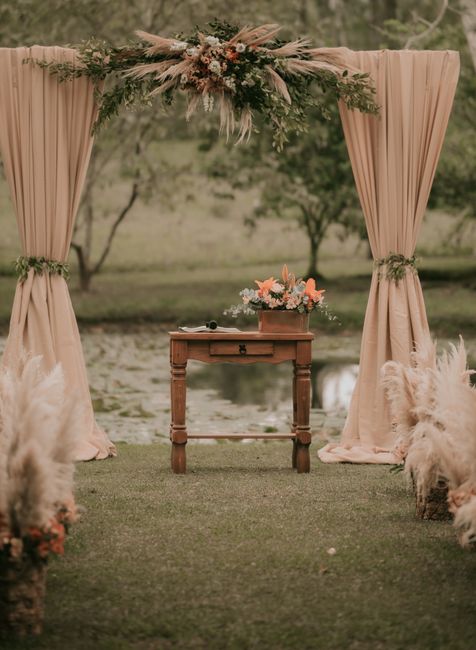
Avoid These Floral Styling Errors for Your Ceremony
Your ceremony flowers do more than fill a space. They frame the aisle, soften the room, guide the eye, and quietly shape the mood of the whole day. Yet a lot can go wrong fast: colours clash with the venue, arrangements look larger on paper than they do in the room, stems wilt at the wrong moment, or the styling simply feels disconnected from the rest of the ceremony. If you want a polished result, it helps to avoid these floral styling errors for your ceremony before they become expensive lessons.
Truth be told, most flower problems are not about having "bad taste". They come from timing issues, poor planning, and not thinking through how flowers behave in real light, real weather, and real venues. In this guide, you will find practical advice on what to avoid, how ceremony floral styling actually comes together, and the simple checks that make everything look considered rather than rushed. A few small decisions can save a lot of stress on the day.
Table of Contents
- Why these styling errors matter
- How ceremony floral styling works
- Key benefits of getting it right
- Who this is for and when it makes sense
- Step-by-step guidance
- Expert tips for better results
- Common mistakes to avoid
- Tools, resources and recommendations
- Law, compliance, standards and best practice
- Options and comparison
- Case study or real-world example
- Practical checklist
- Conclusion
- Frequently asked questions
Why Avoid These Floral Styling Errors for Your Ceremony Matters
Ceremony flowers are not just decorative extras. They affect sightlines, photographs, movement, and even how guests experience the room as they arrive. If the floral styling is too small, too busy, or just slightly off in tone, the whole setting can feel less cohesive. And once the registrar, the celebrant, or the first guest has walked in, there is no easy reset button. Let's face it, flowers are lovely, but they are not forgiving when they are badly placed.
The biggest reason this matters is that ceremony styling has to do several jobs at once. It needs to look beautiful from the front row and the back row. It needs to work in daylight, candlelight, or mixed indoor light. It should suit the venue without fighting it. And if you are using seasonal blooms, dried elements, or more sculptural designs, those choices need to be intentional, not accidental.
There is also a budget angle. Floral mistakes often create hidden costs: extra stems ordered in a panic, last-minute transport changes, replacement flowers, or rushed labour. That kind of scramble can ruin the calm you were hoping for. A careful plan is not overcautious. It is sensible.
If you are still at the early planning stage, it can help to understand the wider service and support around flowers too. Pages such as flower delivery, delivery information, and flower care guidance can be useful when you are working backwards from the event date and deciding what needs to arrive when.
How Avoid These Floral Styling Errors for Your Ceremony Works
Good ceremony floral styling starts with the venue, then the layout, then the flowers. That order matters more than people think. If you choose the flowers first, it is easy to end up forcing them into a space they were never meant for. A tall, airy arrangement that looks elegant in a showroom may block a couple from the side aisle. A dense meadow style can look dreamy in photos and still feel clumsy in a narrow church aisle. Different story in real life.
In practical terms, the process usually looks like this:
- Assess the setting - ceiling height, aisle width, altar position, natural light, and where guests will actually sit.
- Set the visual goal - romantic, modern, classic, garden-inspired, minimal, or seasonal.
- Match flower scale to the room - smaller rooms need restraint; larger rooms can carry more structure.
- Plan the focal points - entrance, aisle, ceremony table, signing area, and backdrop.
- Choose materials that behave well - blooms, foliage, ribbons, mechanics, and containers all matter.
- Check timing and freshness - the route from supplier to ceremony should be as short and smooth as possible.
That last point is where a lot of ceremony styling falls apart. Flowers are living material. They move, open, relax, and sometimes sulk a bit if the room is hot or if they have been out too long. A bouquet that looked firm at 9 a.m. can feel visibly tired by mid-afternoon if it is not handled properly. You do not need to be dramatic about it, but you do need to respect the timeline.
If you are planning more than one floral element, such as bridal bouquets, buttonholes, and venue arrangements, the pieces should speak the same visual language. Not identical. Just coherent. A ceremony often looks most polished when the styling feels edited, not overloaded.
Key Benefits and Practical Advantages
When your ceremony flowers are styled well, the benefits are immediate and surprisingly broad. It is not just about aesthetics, although that part matters a lot. It is also about calm, clarity, and confidence on the day.
- Better photos: Flowers that suit the light and the backdrop support the images without overwhelming them.
- Cleaner visual flow: Guests instinctively know where to look when the focal points are planned well.
- Less stress: A solid plan reduces the chance of last-minute rearranging or emergency substitutions.
- More value from the budget: Well-chosen flowers do more work, so you need fewer "fixes".
- A stronger sense of occasion: Good ceremony styling makes even a modest space feel meaningful.
There is a softer benefit too. A well-designed floral setting helps people settle in emotionally. You can feel it at the back of the room sometimes - the little quiet before the ceremony begins, when everything is still and the arrangements are doing exactly enough, not too much. That balance is what people remember.
For couples and planners who care about consistency, it can also help to review a florist's approach to reliability, service promises, and ethical sourcing. The site's guarantees, sustainability information, and about us pages are useful touchpoints when you are comparing who to trust with the day.
Who This Is For and When It Makes Sense
This advice is useful for anyone planning a wedding ceremony, vow renewal, civil ceremony, church service, or commitment celebration where flowers play a visual role. It also applies to planners, venue coordinators, and family members who get pulled into the floral decisions at the last minute - which, to be fair, happens more often than people admit.
You will find this especially helpful if:
- you want a polished ceremony without overspending;
- your venue has awkward proportions or limited setup time;
- you are working with seasonal flowers and need realistic expectations;
- you are planning from a distance and cannot visit the venue repeatedly;
- you are trying to make sure the flowers photograph well in mixed lighting;
- you need the styling to complement rather than compete with the dress, decor, or architecture.
It also makes sense if you are managing a ceremony in a listed building, a hotel suite, a marquee, or a modern event space. Each setting comes with its own quirks. For example, a bright contemporary room may handle bold colour beautifully, while an older stone venue can absorb light and make pale flowers disappear unless they are styled with enough contrast.
If flowers are being delivered close to the event, practical coordination matters even more. It is worth knowing how flower delivery and the available delivery options fit your schedule so you are not left guessing on the morning of the ceremony.
Step-by-Step Guidance
Here is a practical way to avoid the most common ceremony floral errors without overcomplicating the process.
1. Start with the venue layout
Measure or review the actual ceremony space. A lot of mistakes begin with assumptions. Is the aisle narrow? Is the registrars' table fixed in place? Is there a step, a pillar, a low ceiling, or a drafty doorway? These details change what is realistic.
2. Decide what should be seen first
Every ceremony needs a focal point. It may be the couple, the altar, the signing table, or a floral arch. Choose one or two hero moments, then support them. Trying to make every corner dramatic usually makes the room feel busy rather than beautiful.
3. Pick a colour palette with restraint
Three to five tones is usually enough. Include a main colour, a secondary colour, a neutral, and possibly one accent. A wedding ceremony with too many competing colours can feel patchy, even if each flower is lovely on its own.
4. Match flower choice to the season and the room
Seasonal flowers often offer better texture and better value, but they still need to suit the venue. A loose garden style may work beautifully in daylight, while a more structured arrangement may suit a formal indoor setting. Do not just chase what looks popular on a mood board.
5. Plan transport and hydration carefully
Ceremony flowers need to arrive looking fresh, upright, and ready. That means sensible packaging, secure transport, and enough time to settle before the ceremony starts. If the flowers are being handed over early, ask how they will be stored and refreshed.
6. Check scale at the right distance
Flowers should be tested from several viewpoints. Stand at the back, the side, and the front. A design that looks gorgeous up close can vanish from the room if it is too low or too sparse. This is a common one, honestly.
7. Do a final light check
Natural light, warm bulbs, candles, and flash photography all change how petals and foliage appear. White flowers may read blue in certain light. Deep reds can look darker than expected. It sounds minor until the photos come back.
Once you work through those steps, you are much less likely to make the classic "it looked better in the sample" mistake. That phrase has ended more than one happy morning, I'm afraid.
Expert Tips for Better Results
Here are the little decisions that often separate a decent ceremony setup from a really considered one.
- Use foliage with purpose. Good greenery frames blooms and creates shape, but too much of it can make arrangements feel heavy.
- Repeat elements quietly. A ribbon, a flower family, or one signature bloom can connect the bouquet, aisle pieces, and altar design without making everything match too literally.
- Leave breathing space. Empty space is not wasted space. It helps the eye rest.
- Think about movement. Guests, the couple, the officiant, and photographers all need clear, safe routes.
- Check scent levels. Strongly scented blooms can be beautiful, but in a small enclosed room they may become overwhelming.
- Keep the weather in mind. UK ceremonies can shift from cool and damp to warm and bright without much warning. Flowers need a bit of resilience.
A small but useful tip: if the ceremony is outdoors or partly outdoors, make sure the style still looks good from the worst angle, not just the best one. Wind has a sense of humour. It will find the flimsy bits.
For anyone wanting flowers that still look strong after travel or a longer setup day, a little care knowledge goes a long way. The flower care guidance can help you understand how freshness is preserved and what sort of handling flowers need before they reach the venue.
Common Mistakes to Avoid
If you want the shortest possible list of what not to do, start here.
| Mistake | Why it causes problems | Better approach |
|---|---|---|
| Choosing flowers before checking the venue | Scale, light, and layout issues become harder to fix later | Assess the room first, then build the design around it |
| Using too many colours | The styling can look chaotic in photos and from a distance | Stick to a controlled palette with one clear focal tone |
| Overcrowding the altar or aisle | Guests lose sightlines and movement becomes awkward | Leave space where people need to walk, stand, and look |
| Ignoring transport and timing | Flowers can wilt, bruise, or open too early | Plan arrival, storage, and final placement carefully |
| Forgetting scent, heat, or drafts | What smells lovely in a shop can feel too strong in a small room | Think about the ceremony environment, not just the flowers themselves |
Another common error is copying a Pinterest-style design without checking whether it suits the actual setting. Inspiration is useful. Blind copying is not. A floral arch that looks magical in a field at golden hour may feel completely out of place in a compact registry office. Same flowers, very different story.
And yes, it is easy to fall in love with one dramatic bloom. But if the variety is fragile, out of season, or hard to keep looking fresh, it may be the wrong hero for the day. Beauty has to survive the schedule.
Tools, Resources and Recommendations
You do not need a bag full of specialist tools to plan ceremony flowers well, but a few practical aids help a lot:
- Venue measurements: even rough measurements are better than guesses.
- Phone photos of the space: especially from the aisle, entrance, and ceremony focal point.
- Colour swatches or fabric samples: useful for comparing florals against dresses, table linens, and signage.
- Simple mood board: keep it focused on structure, not just bloom names.
- Delivery and timing plan: know exactly when flowers will arrive and who will receive them.
It is also sensible to review service information before confirming anything important. If you are comparing suppliers or planning around payment timing, the website's payment information, returns and refund policy, and terms and conditions are practical pages to check so there are no surprises later.
For anyone arranging flowers for a business ceremony, launch, or awards event, corporate accounts may also be relevant. Different event types need different levels of flexibility, and it helps when the process is clear from the outset.
Law, Compliance, Standards and Best Practice
For most ceremonies, there is no special legal rule that dictates which flowers you can use or how they should be styled. Still, there are a few best-practice points worth keeping in mind, especially in UK venues.
First, venue rules matter. Some churches, historic spaces, hotels, and registry venues have their own restrictions on open flames, floor-standing structures, taped fixtures, hanging installations, or access times. You may need permission for certain placement methods, and in some buildings the setup rules are quite specific. It is always safer to check than assume.
Second, safety and accessibility are not optional. Floral displays should not block exits, trip paths, wheelchair routes, or emergency access. If an arrangement is freestanding, it should be stable enough to avoid falling over when guests move around it. That sounds obvious, but on a busy morning, obvious things get missed.
Third, if you are using hired vessels, rented props, or installed structures, you should understand who is responsible for collection, damage, and packing. That is where proper paperwork and clear communication help. It is not glamorous, but it saves trouble.
Finally, ethical and sustainability expectations are becoming more important to couples and venues. If those values matter to you, ask about sourcing, packaging, and waste handling. A florist's sustainability approach can give useful reassurance when you want the ceremony to feel beautiful without feeling wasteful.
Options, Methods, or Comparison Table
There is no single "right" ceremony floral style. The best option depends on the venue, budget, and the kind of atmosphere you want to create. Here is a simple comparison of common approaches.
| Style | Best for | Strengths | Watch-outs |
|---|---|---|---|
| Classic grouped arrangements | Formal venues, traditional ceremonies | Elegant, clear, easy to coordinate | Can look stiff if overworked |
| Loose garden-style flowers | Romantic, relaxed, seasonal settings | Natural, soft, photographic | Needs careful control to avoid messiness |
| Minimal focal styling | Small spaces, modern registry rooms | Clean, cost-conscious, refined | Can disappear if under-scaled |
| Statement installations | Larger venues, high-impact ceremonies | Dramatic, memorable, immersive | More planning, more cost, more risk if proportions are wrong |
A useful rule of thumb: if the venue already has strong architecture, you may need less floral volume than you think. If the room is plain, flowers can carry more of the visual weight. Neither is better. They just behave differently.
Case Study or Real-World Example
Imagine a small indoor ceremony in a bright London venue with pale walls, a modest aisle, and a simple front table. The couple initially wants a large flower arch, full aisle clusters, and oversized bouquets. On paper, it sounds lovely. In practice, it would have crowded the room, hidden the front table, and left little space for the officiant.
After stepping back, they simplify the plan. The colour palette narrows to soft white, blush, and muted greenery. The aisle flowers are reduced to a few low arrangements. A fuller design is kept behind the couple, where it frames the ceremony without blocking anyone's view. The bouquets echo the same tones but are slightly less dense, which makes them easier to carry and photograph.
The result is calmer, brighter, and more balanced. Guests can see. The photographs have breathing room. The flowers feel intentional rather than forced. And perhaps most importantly, nobody is rearranging stems at the last second while someone checks the clock. That is a win in anyone's book.
Practical Checklist
Use this quick checklist before the ceremony flowers are finalised:
- Have I checked the venue dimensions and restrictions?
- Does the colour palette suit the room and the outfits?
- Are the flowers sized correctly for the space?
- Have I planned the focal points clearly?
- Will guests still have an easy walking route?
- Have I allowed enough time for delivery and settling?
- Do I know who receives the flowers on arrival?
- Have I checked scent, heat, and light conditions?
- Do the bouquet, aisle flowers, and backdrop feel visually connected?
- Have I reviewed delivery, payment, and policy details in advance?
If you can tick most of those boxes, you are probably in good shape. If a few are missing, sort them now rather than hoping they will sort themselves later. They usually do not.
One final planning note: if you are coordinating across a tight timeline, make sure you know how to reach the florist and how to confirm last-minute details. The site's contact page and about us page are handy starting points for that kind of conversation.
Get a free quote today and see how much you can save.
Conclusion
Floral styling for a ceremony is not about doing the most. It is about doing the right things in the right order, with enough care to let the flowers support the moment instead of distracting from it. When you avoid the common errors - poor scale, clashing colours, bad timing, cramped placement, and weak coordination - everything feels smoother. The room breathes. The photos settle. The ceremony feels like itself, only more beautiful.
That is really the aim here: not perfection for its own sake, but confidence. A ceremony with well-chosen flowers feels calm, elegant, and properly thought through. And on the day, that calm is worth a lot.
Frequently Asked Questions
What are the most common floral styling errors for a ceremony?
The most common errors are choosing the wrong scale for the venue, using too many colours, blocking sightlines, underestimating delivery timing, and ignoring how the flowers will look in the room's actual light.
How do I know if my ceremony flowers are too large?
Stand in the space and check whether the flowers obscure key views, crowd the aisle, or compete with the couple and officiant. If the arrangement looks impressive but makes the room feel tight, it is probably too large.
Should ceremony flowers match the bridal bouquet exactly?
Not necessarily. They should feel connected, but exact matching can look flat. A better approach is to repeat a few tones, textures, or one signature flower family across the whole design.
How early should ceremony flowers be arranged before the event?
As early as practical for the venue and flower type, but not so early that freshness suffers. Timing depends on the blooms, transport distance, and setup conditions. Freshness and handling matter more than making it "super early".
What flowers work best if the ceremony room is small?
Smaller spaces usually suit restrained arrangements, low designs, and lighter visual weight. You want flowers that frame the room without overpowering it. Compact roses, delicate seasonal stems, and controlled foliage often work well.
Can I use scented flowers for a ceremony?
Yes, but with caution. Strongly scented blooms can be lovely in open spaces and overwhelming in a small indoor room. If the ceremony is enclosed, test the fragrance level before committing.
How do I avoid flowers looking flat in photos?
Use some texture, a clear focal point, and enough contrast with the backdrop. Flowers need space around them to breathe in photographs. A cluttered setup often looks less elegant on camera than it does in person.
What should I ask a florist before confirming ceremony flowers?
Ask about delivery timing, freshness handling, venue setup experience, substitution policy, payment terms, and what happens if conditions change. Clear answers are a very good sign.
Are seasonal flowers always the better choice?
Often they are a practical choice, but not always the only choice. Seasonal flowers can offer better availability and a more natural look, yet the final decision should still fit the venue, palette, and overall style.
How can I make my ceremony flowers look cohesive without spending too much?
Limit the palette, repeat a few flowers or textures, and focus on one or two high-impact areas. A smaller number of well-placed arrangements usually looks more polished than lots of small, unrelated pieces.
What if the venue has strict rules about decorations?
Then you design within those limits rather than fight them. Many venues have access rules, fixation restrictions, or safety requirements. It is better to work with the space and keep the styling elegant and compliant.
Is it worth reviewing delivery and policy details before ordering?
Absolutely. Delivery timing, payment terms, returns, and guarantees are part of a smooth experience. If you understand those details in advance, you reduce the chance of last-minute confusion.
When ceremony flowers are planned thoughtfully, they quietly do their job and let the moment shine. That is the sweet spot - and honestly, it is a lovely place to be.